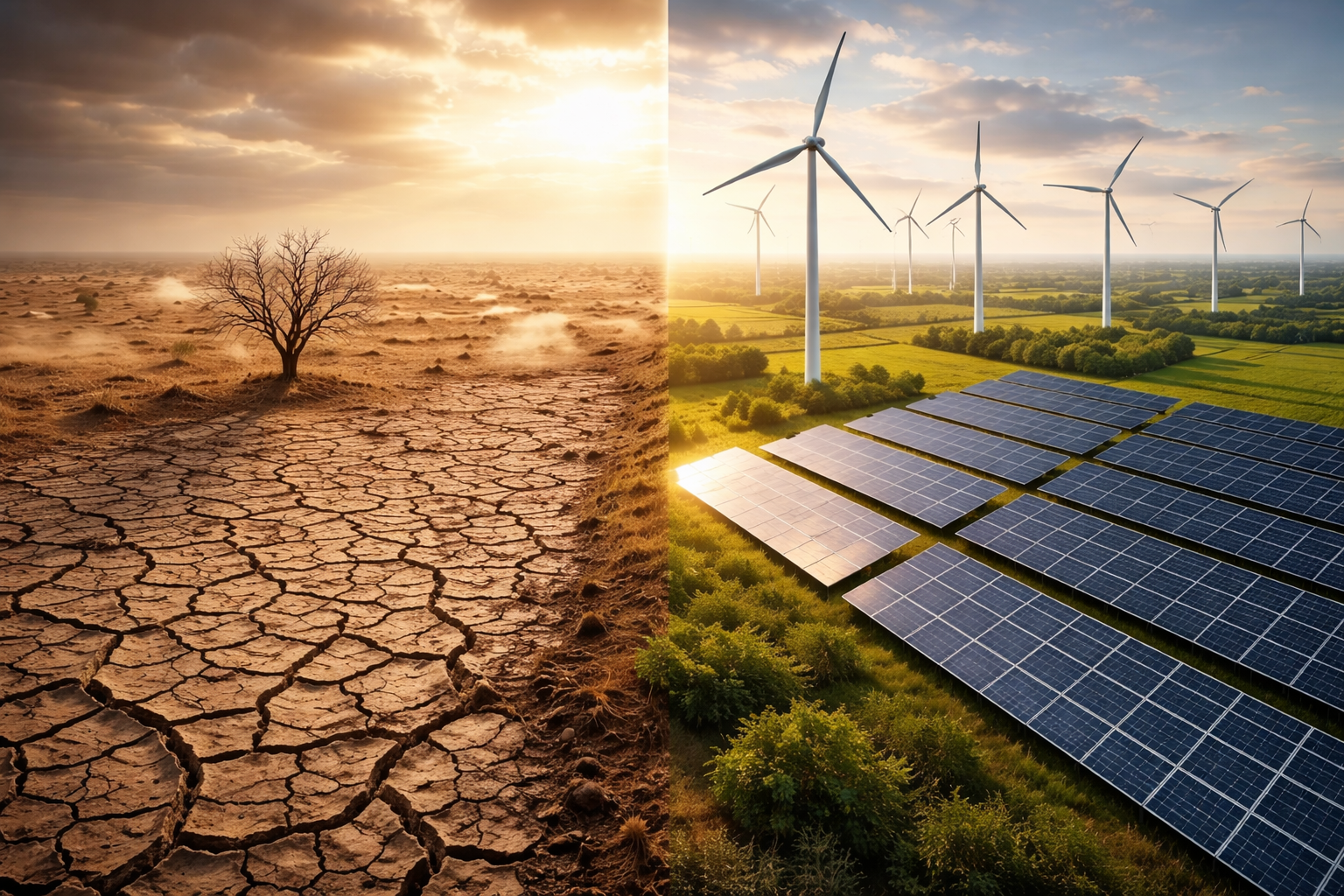
Climate change is no longer just an environmental issue — it is one of the greatest economic challenges facing the world today.
Rising temperatures, extreme weather, and shifting ecosystems are affecting industries, jobs, food supply, infrastructure, and national economies.
Governments, businesses, and communities are struggling to adapt.
Economic Costs of Climate Change
Natural disasters such as floods, droughts, heatwaves, and storms are becoming more frequent and severe.
These events cause billions of dollars in damage every year.
Infrastructure, agriculture, housing, and transportation systems are at risk.
Insurance costs are rising, making some regions less affordable to live in.
Agriculture Under Threat
Food production is one of the sectors most affected by climate change.
Changing rainfall patterns, soil degradation, and extreme heat reduce crop yields.
This leads to higher food prices, supply shortages, and increased global hunger risk.
Farmers worldwide are being forced to adapt to new growing conditions.
Water Scarcity and Economic Stability
Many regions are experiencing water shortages due to shrinking glaciers and irregular rainfall.
Water scarcity affects agriculture, industry, and daily life.
Countries dependent on rivers and lakes face growing political and economic tension.
Energy Transition and Jobs
As fossil fuels decline, renewable energy industries are expanding.
Solar, wind, and electric vehicle sectors are creating new job opportunities.
However, workers in traditional energy industries must transition to new skills.
This shift is reshaping labor markets globally.
Impact on Global Trade
Climate-related disruptions affect supply chains and transportation.
Ports, roads, and shipping routes are vulnerable to rising sea levels and storms.
Businesses must invest in more resilient logistics systems.
Urban Cities at Risk
Many major cities are located near coastlines.
Rising sea levels threaten homes, businesses, and public infrastructure.
Governments must spend heavily on flood defenses and urban planning.
Climate and Migration
As certain regions become uninhabitable due to drought or flooding, people are forced to relocate.
This creates social, political, and economic challenges in receiving areas.
Climate migration is becoming a major global issue.
Role of Governments and Policy
Countries are investing in climate adaptation and mitigation strategies.
These include:
- Renewable energy projects
- Sustainable agriculture
- Green infrastructure
- Emission reduction policies
However, progress varies widely across nations.
Businesses and Sustainability
More companies are adopting sustainable practices to reduce carbon footprints.
Consumers are also demanding eco-friendly products.
This is reshaping global markets.
Economic Opportunity in Green Technology
Climate change has also created opportunities in innovation.
Clean energy, electric vehicles, and sustainable materials are booming industries.
Investments in green technology are expected to grow rapidly.
Global Cooperation Needed
No country can fight climate change alone.
International collaboration is essential to reduce emissions, share technology, and support vulnerable regions.
Final Outlook
Climate change will continue to shape global economies for decades.
The world faces a critical choice: invest in sustainable development now or pay far higher costs later.