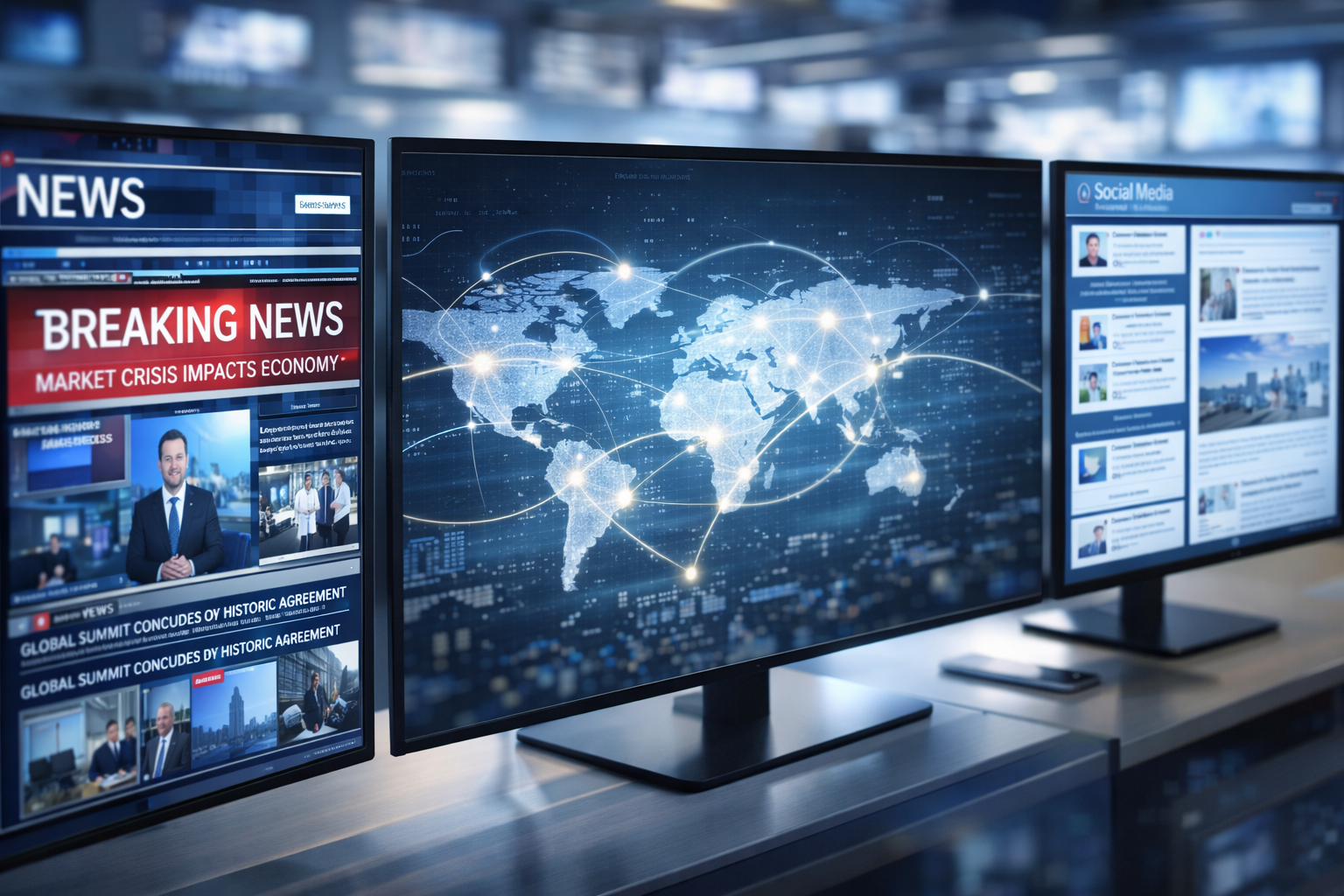
In today’s interconnected world, media has become one of the most powerful forces influencing how people think, feel, and act. News outlets, social platforms, and digital communication tools shape public opinion across borders in ways never seen before.
From political movements to social change, media plays a central role in defining what issues matter and how they are understood.
As information travels instantly across the globe, the responsibility of media has never been greater — nor its impact more significant.
From Traditional News to Digital Platforms
In the past, global opinion was largely shaped by major newspapers, television networks, and radio broadcasters.
Today, digital media dominates.
Social media platforms, online news sites, and independent creators now compete with traditional journalism for public attention.
This shift has democratized information but also created new challenges, including misinformation, bias, and echo chambers.
People no longer rely on a single source of news; instead, they consume content from multiple channels, often tailored to their personal beliefs.
Media as a Political Tool
Governments, political leaders, and organizations increasingly use media to influence public perception.
Press conferences, official statements, and strategic messaging are carefully designed to shape narratives.
At the same time, investigative journalism continues to expose corruption, inequality, and abuse of power.
This tension between propaganda and truth makes media a battlefield of ideas.
In many countries, media freedom remains a critical issue, as restrictions on journalism can limit public awareness and democratic accountability.
Social Media and Instant Influence
Social media has transformed how quickly information spreads.
A single post, video, or tweet can reach millions within minutes, sparking global debates or protests.
Movements advocating for justice, environmental protection, or human rights often gain momentum through online platforms.
However, the same tools can also spread false information, hate speech, and polarization.
The speed of social media means that opinions are formed before facts are fully verified.
Misinformation and Fake News
One of the greatest challenges of modern media is misinformation.
False stories, manipulated images, and misleading headlines can spread faster than accurate reporting.
This has serious consequences, influencing elections, public health decisions, and social trust.
Many organizations are now working to improve fact-checking, digital literacy, and responsible reporting.
However, combating misinformation remains an ongoing global struggle.
Media and Cultural Perception
Media does more than report events — it shapes how cultures see one another.
Films, news reports, and online content influence global perceptions of different countries, communities, and lifestyles.
Positive representation can build understanding, while negative stereotypes can deepen divisions.
International media plays a key role in promoting cultural exchange and mutual respect.
The Power of Visual Storytelling
Images and videos often have a stronger emotional impact than words alone.
Photographs of natural disasters, conflicts, or social protests can mobilize global support within hours.
Visual media humanizes distant issues, making them feel personal and urgent.
This is why many activists and journalists prioritize powerful imagery in their work.
Corporate Influence on Media
Large corporations increasingly own major media outlets.
This raises concerns about bias, commercial influence, and editorial independence.
Advertising revenue, sponsorships, and political pressure can affect what stories receive coverage — and how they are framed.
Audiences are now encouraged to consume news critically and seek diverse perspectives.
Media’s Role in Global Awareness
Despite its flaws, media remains one of the most important tools for global awareness.
It connects people across continents, highlights injustices, and amplifies marginalized voices.
Major humanitarian crises often gain international attention through media coverage, leading to aid and policy responses.
In this sense, media can be a force for positive change.
Future of Media in a Digital World
Artificial intelligence, deepfake technology, and automated news systems are transforming journalism.
While these tools can improve efficiency, they also raise ethical concerns about authenticity and trust.
The future of media will depend on transparency, accountability, and public trust.
Final Takeaway
Media shapes how the world sees itself.
It informs, persuades, and sometimes misleads — but it is undeniably powerful.
As digital communication continues to evolve, responsible journalism and critical thinking will be essential for a healthy global society.